India's Clinical Trial Boom, Decoded: The Complete 2026 CDSCO Approval Guide
India has quietly become one of the most-watched clinical research markets in the world and the regulatory framework governing it just changed again. This guide sets out exactly where the market stands, what the Central Drugs Standard Control Organisation (CDSCO) now requires, and what shifted under the January 2026 amendment to the New Drugs and Clinical Trials Rules.
 Hema Dubey
Aug 27, 2026 01:28
37
Hema Dubey
Aug 27, 2026 01:28
37
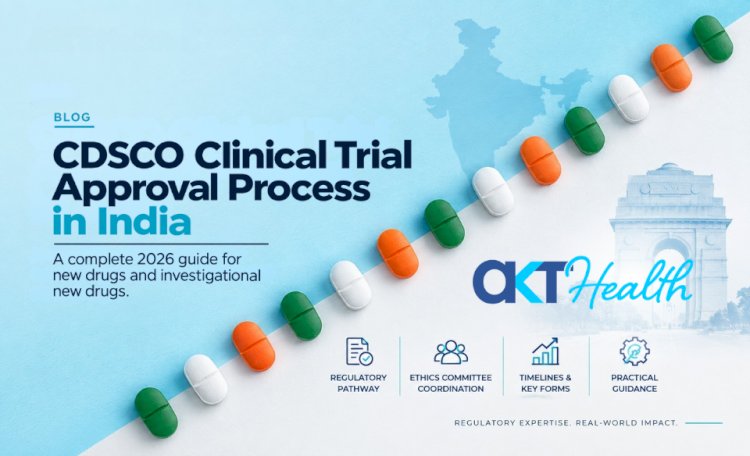
India’s clinical research landscape is entering a new phase. Growing global sponsor interest, expanding trial activity, and a series of regulatory reforms are making the country increasingly important in global clinical development.
At the same time, the pathway to starting a clinical trial in India is changing.
For sponsors planning clinical trials of new drugs or investigational new drugs (INDs), understanding the Central Drugs Standard Control Organisation (CDSCO) approval process now means looking beyond the original New Drugs and Clinical Trials (NDCT) Rules, 2019. Changes introduced across 2024–2026 affect CRO registration, test licences, BA/BE studies, and most importantly for trial startup the coordination of CDSCO and Ethics Committee review.
This guide breaks down the 2026 CDSCO clinical trial approval pathway, from regulatory strategy and dossier preparation to SUGAM submission, scientific review, Ethics Committee coordination, CTRI registration, investigational product requirements, and ongoing compliance.
What Changed in 2026?
One of the most important changes is how sponsors can coordinate regulatory and Ethics Committee review.
A CDSCO advisory dated 11 May 2026 clarified that clinical trial applications may be submitted to CDSCO and registered Ethics Committees in parallel. Registered Ethics Committees can process applications independently rather than waiting for approval from the Central Licensing Authority.
For sponsors, this creates an opportunity to run two important trial-startup workstreams concurrently rather than treating them as strictly sequential steps.
Other recent changes are also reshaping the regulatory pathway. G.S.R. 46(E), notified on 20 January 2026, amended requirements relating to the manufacture of new drugs and investigational new drugs for clinical trials, BA/BE studies, examination, test and analysis, including reducing specified test-licence processing timelines from 90 to 45 working days.
Separately, G.S.R. 50(E), dated 21 January 2026, introduced a prior-intimation mechanism for eligible BA/BE studies involving unapproved drugs intended for export, with the relevant system implemented through the SUGAM portal from 21 April 2026.
Taken together, these changes make 2026 more than another year under the NDCT framework they have practical implications for how sponsors plan regulatory submissions, Ethics Committee review, investigational product readiness, and overall study startup.
2026 Regulatory Snapshot
- Parallel CDSCO + Ethics Committee review: CDSCO’s 11 May 2026 advisory supports simultaneous submission and independent processing by registered Ethics Committees.
- 45-working-day test-licence timeline: G.S.R. 46(E) reduced specified processing timelines from the previous 90 working days.
- New BA/BE prior-intimation pathway: Eligible studies can use the mechanism introduced through G.S.R. 50(E), with SUGAM implementation from 21 April 2026.
- Mandatory CRO registration: From 1 April 2025, CROs undertaking applicable clinical trials and BA/BE studies under the NDCT framework must be registered with CDSCO.
- NDCT Rules, 2019 remain the foundation: The Rules continue to govern clinical trials of new drugs and investigational new drugs, including regulatory review, Ethics Committee requirements, compensation and safety obligations.
- Defined regulatory timelines do not equal total startup time: Actual trial initiation still depends on dossier quality, regulatory queries, Ethics Committee review, site readiness, CTRI registration and investigational product availability.
India Is Now the Third-Largest Clinical Trials Destination Globally
Why India Is Moving Up the Global Clinical Research
The regulatory changes are happening alongside a broader expansion of India’s clinical research ecosystem.
India offers a population of more than 1.4 billion people, significant disease diversity, established tertiary-care and research institutions, and an expanding network of investigators and clinical research organizations. These factors are increasing the country’s relevance for both multinational clinical development programs and emerging biotech sponsors.
Market estimates also point in the same direction. Depending on the methodology and scope used, research firms estimate India’s clinical trials market at approximately $1.4–2.2 billion in 2024–2025, with projections reaching roughly $2.2–3.9 billion by 2030–2032.

The range between forecasts reflects differences in how individual research firms define the clinical trials market, but the overall direction is consistent: India’s clinical research sector is expected to continue expanding through the end of the decade.
The opportunity is also moving beyond later-stage development. While Phase III studies continue to represent a substantial share of clinical trial activity, India is building greater early-phase capability, including initiatives such as the ICMR Phase I Clinical Trial Network.
For global sponsors, the implication is increasingly strategic: India is becoming a market to consider during global clinical development planning, not simply after an international development program has already been established.
What Changed for Clinical Development in 2025–2026?
Three developments are particularly important for sponsors planning India studies.

One distinction sponsors should not miss
The 45-working-day change relates to specified test-license requirements.
It does not mean that all CDSCO clinical trial approvals have been reduced from 90 to 45 working days.
Clinical trial permission typically involving the Form CT-04 → CT-06 pathway continues under the applicable NDCT clinical trial provisions.
What Is CDSCO, and What Authority Does It Exercise?
The Central Drugs Standard Control Organisation is India's apex national regulatory authority for pharmaceuticals, biologics, medical devices, and diagnostics. It operates under the Directorate General of Health Services (DGHS), Ministry of Health and Family Welfare, and is headed by the Drugs Controller General of India (DCGI), commonly referred to as the Central Licensing Authority (CLA) in Indian regulations.
CDSCO's regulatory mandate covers:
● Approval of new drugs and investigational new drugs for clinical trial and marketing authorization
● Licensing and oversight of clinical trial sites and investigators
● Regulation of medical device safety, performance, and clinical investigations (under the separate Medical Devices Rules, 2017 framework)
● Import licensing for investigational products
● Pharmacovigilance and post-market safety surveillance
● Coordination with State Drug Authorities on manufacturing and distribution
● Registration and inspection of Clinical Research Organizations (CROs), mandatory from 1 April 2025
The primary legal instrument governing clinical trials of new drugs in India is the New Drugs and Clinical Trials (NDCT) Rules, 2019, enacted under the Drugs and Cosmetics Act, 1940. The NDCT Rules replaced the legacy Schedule Y framework and introduced substantive reforms including defined approval timelines, simultaneous global trial participation, mandatory compensation provisions, strengthened Ethics Committee registration requirements, and a structured set of CT-series application forms.

The core legal instrument is the New Drugs and Clinical Trials (NDCT) Rules, 2019, made under the Drugs and Cosmetics Act, 1940. It replaced the legacy Schedule Y framework and introduced defined approval timelines, simultaneous global trial participation, mandatory compensation provisions, and stronger Ethics Committee registration requirements, and has since been amended in 2024 and again in January 2026.
Key Regulatory Developments Relevant in 2026

These developments demonstrate an important regulatory direction: reducing avoidable sequential processing while strengthening formal oversight and accountability.
Who Needs CDSCO Clinical Trial Permission?
Depending on the proposed development program and product status, CDSCO permission may be required for clinical trials involving:
- New chemical entities
- New biological entities
- Investigational new drugs
- Certain drugs approved outside India but proposed for clinical investigation in India
- Certain fixed-dose combinations
- New indications or routes of administration falling within the regulatory definition of a new drug
- Other products meeting the applicable definition of a new drug under the NDCT Rules
BA/BE studies are also regulated under the NDCT framework but follow their applicable regulatory pathways.
What about medical devices?
Clinical investigations of medical devices should be assessed separately.
They are primarily governed by the Medical Devices Rules, 2017, with different application requirements, forms and regulatory considerations.
Who requires CDSCO approval?
CDSCO approval under the NDCT Rules, 2019 is mandatory for:
● New drugs not previously approved in India, including new chemical entities (NCEs), new biological entities (NBEs), and biosimilars
● Investigational new drugs (INDs) being evaluated for the first time in human subjects
● Fixed-dose combinations (FDCs) of approved drugs not previously approved in combination
● Already-approved drugs being investigated for a new indication, new patient population, or new route of administration
● Bioavailability/bioequivalence (BA/BE) studies for generic drug development
The NDCT Rules, 2019 explicitly permit simultaneous global trials sponsors running Phase I, II, or III trials in ICH-member countries can include Indian sites concurrently, rather than waiting for global results before initiating Indian studies. This reform, one of the most significant in recent Indian regulatory history, has materially increased India's attractiveness for early-phase global development programs.
Step-by-step CDSCO approval process

Step 1: Regulatory Strategy & Pathway Assessment
Before assembling the application, sponsors should establish exactly which regulatory pathway applies.
Important questions include:
- Does the product qualify as a new drug or IND?
- Is the study part of a global clinical development program?
- What prior clinical evidence is available?
- Are India-specific data requirements likely?
- Which CDSCO forms apply?
- Will the investigational product be imported or manufactured in India?
- Which sites and registered Ethics Committees will participate?
- Is the selected CRO appropriately registered?
- Which regulatory and operational activities can proceed in parallel?
For complex or novel development programs, early regulatory assessment can prevent significant downstream delays.
Step 2: Prepare the Clinical Trial Dossier
A complete and internally consistent dossier is one of the most important factors within a sponsor's control.
Core documentation

A pre-submission regulatory gap assessment and document-consistency review can help identify issues before they become CDSCO queries.
Step 3: Submit Through SUGAM
CDSCO uses the SUGAM online platform for regulatory applications.
For permission to conduct a clinical trial of a new drug or investigational new drug, Form CT-04 is the principal application form under the NDCT Rules.
Important forms sponsors may encounter include:
 Before filing, sponsors should verify the latest CDSCO requirements and current SUGAM workflow, as digital procedures can change.
Step 4: CDSCO Administrative & Technical Review
Following submission, CDSCO assesses the application for completeness and regulatory acceptability.
Common problems include:
- Missing documents
- Incorrect application pathway
- Inconsistent protocol or product information
- Version mismatches
- Incomplete CMC information
- Missing site/investigator information
- Administrative or fee-related deficiencies
Regulatory queries can extend the overall timeline, which is why submission quality matters as much as the statutory review clock.
Step 5: Scientific & Subject Expert Committee Review
Depending on the product and application, CDSCO may seek evaluation or recommendations from the relevant Subject Expert Committee (SEC).
The scientific review can consider:
- Scientific rationale
- Existing clinical and nonclinical evidence
- Risk-benefit profile
- Study design and endpoints
- Dose justification
- Statistical approach
- Participant-safety measures
- India-specific clinical considerations
The outcome may involve a recommendation for approval, modifications/additional information, or non-approval.
Step 6: CDSCO Regulatory Decision
Following the applicable review, the Central Licensing Authority communicates its decision.
For an explicitly approved clinical trial application, permission may be granted through Form CT-06, subject to specified conditions.
What about deemed or automatic approval?
The NDCT framework also contains deemed-approval mechanisms for specified application categories.
For applicable new drugs or INDs that are part of discovery, research and manufacture in India, where the statutory conditions for deemed approval are satisfied, the applicant informs the Central Licensing Authority in Form CT-4A before initiating the trial.
Sponsors should not interpret this as a general “automatic approval after 30 days” rule for every clinical trial. Applicability depends on the specific provisions and development pathway.
Key Regulatory Timelines


Step 7: Registered Ethics Committee Review Parallel Track
Ethics Committee review is fundamental to participant protection.
A particularly important 2026 development is CDSCO's 11 May guidance on parallel submission and processing of clinical trial applications by CDSCO and registered Ethics Committees.
This means sponsors should consider CDSCO and EC review as coordinated parallel workstreams, where appropriate.
The EC evaluates matters including:
- Ethical acceptability
- Risk-benefit
- Informed consent
- Participant information
- Compensation
- Recruitment
- Investigator and site suitability
- Privacy and confidentiality
- Participant-safety oversight
For multicenter studies, sponsors must carefully coordinate site-specific EC requirements and document versions.
Step 8: CTRI Registration
Applicable clinical trials must be prospectively registered with the Clinical Trials Registry India (CTRI) before enrollment of the first participant.
The CTRI record includes information such as:
- Study design
- Intervention
- Eligibility criteria
- Trial sites
- Investigators
- Sponsor
- Outcomes
- Enrollment
- Ethics and regulatory information
The CTRI record should remain aligned with the approved protocol and be updated when required.
Step 9: Investigational Product Readiness
Clinical trial permission alone does not mean the investigational product is ready for use at Indian sites.
Where the product is manufactured outside India, applicable import requirements must be addressed.
Relevant forms can include:
CT-16- Application for import licence
CT-17-Import licence
For products manufactured in India for clinical trials, BA/BE studies, examination, test or analysis, sponsors should also assess the implications of the 2026 G.S.R. 46(E) amendment.
This is where the distinction between clinical trial permission and test/manufacturing authorization becomes particularly important.
Step 10: Trial Initiation & Ongoing Compliance
Once all applicable regulatory, ethical, and operational prerequisites are satisfied, participant enrollment can begin.
Compliance obligations continue throughout the study and can include:
- Serious adverse event reporting
- Safety assessment and follow-up
- Trial-related injury and compensation requirements
- Protocol amendment management
- Ethics Committee reporting
- CTRI updates
- Investigational product accountability
- Trial documentation and data integrity
- Inspection readiness
- Study completion or termination reporting
Sponsors should establish India-specific regulatory and safety workflows before first-patient enrollment, rather than relying solely on global operating procedures.
How Long Should Sponsors Plan for?
A regulatory review timeline is not the same as the total time required to activate a clinical trial.
For operational planning, sponsors should account for:

 For internal project planning, a sponsor may use approximately 4–6 months for a relatively straightforward, well-prepared program, with longer timelines possible where regulatory queries, complex scientific review, multiple sites or investigational product constraints are involved.
This should be treated as a planning estimate rather than a CDSCO-prescribed timeline.
Where Do Clinical Trial Applications Lose Time?
1. Incomplete or inconsistent dossiers
A dossier may contain all expected sections but still generate queries because the information does not align across documents.
Reduce the risk: Conduct a formal regulatory and document-consistency review before submission.
2. Protocol issues identified during scientific review
Weak endpoints, insufficient dose rationale, inadequate sample-size justification or unclear safety monitoring can generate substantial queries.
Reduce the risk: Bring regulatory strategy into protocol development before the protocol is finalized.
3. Incorrect pathway or form selection
The NDCT framework contains multiple application mechanisms.
Reduce the risk: Confirm product classification, development status and regulatory pathway before starting the SUGAM submission.
4. Ethics Committee coordination
In multicenter trials, different meeting schedules, translations and site requirements can become the startup bottleneck.
Reduce the risk: Begin EC preparation alongside the CDSCO workstream.
5. Investigational product planning starts too late
Regulatory permission is of limited operational value if the investigational product cannot reach trial sites.
Reduce the risk: Integrate import/manufacturing planning into the initial regulatory strategy.
6. CRO registration is not verified
Applicable CROs undertaking regulated clinical trial and BA/BE activities must meet current CDSCO registration requirements.
Reduce the risk: Verify CRO regulatory status during vendor qualification.
Building a Connected India Clinical Development Strategy
India's evolving framework provides sponsors with opportunities to build clinical development programs that are more coordinated and predictable.
But the strongest strategy does not treat CDSCO submission as an isolated activity.
It connects:
Clinical Strategy → Evidence → Regulatory → Ethics → Safety → Trial Operations → Lifecycle Compliance
This becomes especially important for global pharmaceutical and biotechnology companies managing development across multiple jurisdictions.
India-specific requirements must be met without losing alignment with the broader global evidence and regulatory strategy.
How AKT Health Supports Clinical Development in India
AKT Health supports pharmaceutical, biotechnology and healthcare organizations across the clinical and regulatory development lifecycle.
Our Clinical and Medical Services can support organizations with:
- Clinical development and evidence strategy
- India regulatory pathway assessment
- CDSCO submission planning
- Regulatory dossier gap assessment
- SUGAM submission support
- Regulatory and scientific query management
- Ethics Committee coordination
- Investigational product regulatory planning
- Safety and lifecycle compliance
- India-to-global development alignment
For organizations looking for a more integrated pathway, AKT Health's Clinical Development Accelerator brings Clinical and Medical capabilities together to support programs from development strategy through evidence and regulatory execution.
Digital regulatory workflows can also be supported through RegXtrakt, AKT Health's AI-assisted regulatory operations platform, helping teams connect regulatory information, documentation and ongoing obligations across the product lifecycle.
The objective is not simply to secure a regulatory permission.
It is to build a clinical development pathway that can move efficiently from strategy to evidence to execution.
Plan Your India Clinical Development Strategy
India's regulatory environment is becoming more structured, digital and increasingly supportive of coordinated clinical development.
For sponsors, the opportunity is not simply faster processing—it is the ability to build a better-connected pathway across clinical strategy, regulatory review, Ethics Committee coordination, evidence generation and compliance.
If you are preparing your first India clinical trial, adding India to a global development program, or assessing how the 2025–2026 regulatory changes affect an existing program, AKT Health can help you develop an India clinical and regulatory strategy aligned with your broader development objectives.
Contact: info@akthealth.com
Website: www.akthealth.com
Frequently Asked Questions
1. What rules govern clinical trials in India?
Clinical trials involving new drugs and investigational new drugs are principally governed by the New Drugs and Clinical Trials Rules, 2019, together with subsequent amendments, notifications and CDSCO guidance.
2. How long does CDSCO take to approve a clinical trial?
The timeline depends on the application category. Specified India-developed new drug/IND pathways have a 30-working-day mechanism, while applicable global clinical trial applications may be subject to a 90-working-day review timeline.
These should not be confused with the total study-startup timeline.
3. Did CDSCO reduce clinical trial approval to 45 working days in 2026?
No.
The 2026 45-working-day change under G.S.R. 46(E) applies to specified test-license requirements. It does not mean every clinical trial application is now approved within 45 working days.
4. Can Ethics Committee and CDSCO review run in parallel?
Yes. CDSCO issued guidance on 11 May 2026 addressing parallel submission and processing of clinical trial applications by CDSCO and registered Ethics Committees.
5. Is CTRI registration required?
Applicable clinical trials must be prospectively registered with the Clinical Trials Registry – India before enrollment of the first participant.
6. Do CROs need CDSCO registration?
Applicable CROs undertaking regulated clinical trial and BA/BE activities are subject to the CDSCO registration framework. The mandatory registration requirement became effective from 1 April 2025.
7. What changed for BA/BE studies in 2026?
The 2026 regulatory changes introduced a prior-intimation mechanism for specified eligible BA/BE studies involving unapproved drugs intended for export, with the relevant SUGAM mechanism implemented from 21 April 2026.
8. Do medical-device clinical investigations follow this same process?
No. Medical-device clinical investigations are primarily governed under the Medical Devices Rules, 2017 and require a separate regulatory pathway assessment.