How AI Turns Patient Data into Proactive Care
From real-time monitoring to predictive analytics, discover how AI is transforming raw patient data into personalized, proactive care strategies that improve outcomes and reduce costs.
 Hema Dubey
Jan 23, 2026 09:34
2330
Hema Dubey
Jan 23, 2026 09:34
2330
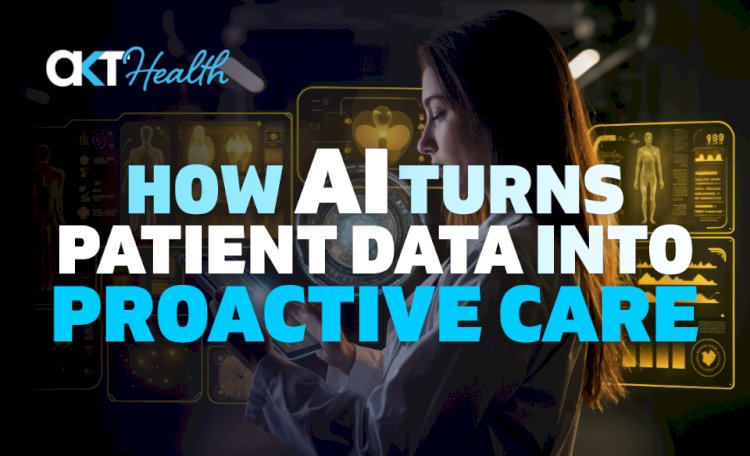
For decades, healthcare operated in a reactive model; patients sought care only after symptoms appeared. But today, the convergence of AI, real-world data, and remote monitoring is shifting that paradigm, and Care is now evolving toward a predictive and preventive model, where systems learn from every heartbeat, lab report, and wearable signal.
Artificial Intelligence isn’t just analyzing data; it’s anticipating disease, guiding clinicians, and enabling continuous care beyond hospital walls.
At AKT Health, this transformation aligns with our core services, Clinical, Medical, Outcomes, and Commercial, to create an intelligent, patient-centric ecosystem powered by actionable data.
|
Traditional Healthcare |
AI-Enabled Healthcare (Proactive) |
|
Reactive—treating illness after onset |
Predictive—detecting disease before symptoms |
|
Hospital-centric episodic care |
Continuous remote monitoring |
|
Manual data analysis |
Real-time machine learning algorithms |
|
Population-level averages |
Personalized, precision-based insights |
|
Data locked in silos |
Interoperable, learning health networks |
The Data Universe: Every Byte Matters
Modern healthcare generates petabytes of information from electronic health records (EHRs), wearables, lab systems, and even social determinants of health (SDOH). Healthcare data is expanding exponentially, projected to exceed 36 zettabytes by 2025 (IDC).
Yet, over 80% of this data is unstructured, buried in physician notes, imaging scans, and wearable streams.
AI bridges this gap through:
- Natural Language Processing (NLP): Extracts meaning from medical notes and research reports.
- Computer Vision: Interprets imaging data for early detection (CT, MRI, histopathology).
- IoT & Wearables (e.g., Impakt Health / Impakt Life): Continuously capture vitals like SpO₂, HRV, sleep, and glucose levels.
- Federated Learning: Enables data-driven insights across institutions without violating patient privacy.
Fact: According to Accenture, AI could save up to $150 billion annually in U.S. healthcare costs by 2026 through predictive analytics and automation.
These inputs feed clinical and medical workflows that transition from episodic care to continuous care.
Predictive Analytics in Action: Early Warnings, Not Late Diagnoses
AI’s true power lies in its ability to predict risk before it happens.
Predictive algorithms analyze real-world and clinical data to anticipate risks, transforming patient management from crisis response to early prevention, such as:
- Heart failure exacerbations
- Hypoglycemic episodes
- Infection risk in post-operative patients
- Non-adherence to medication
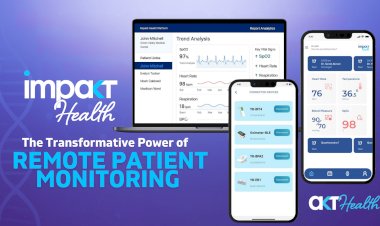
For instance, AKT Health’s Remote Patient Monitoring (RPM) solution continuously learns from patient trends, alerting clinicians when subtle deviations appear long before they manifest as emergencies.
This proactive alerting not only saves lives but also reduces avoidable hospitalizations by up to 30%.
Real Case Studies

Personalization: Care That Learns with Every Patient
AI algorithms don’t just detect risk, they adapt to each individual. By integrating genomics, lifestyle data, and treatment response, AI builds a dynamic profile for each patient, enabling:
- Personalized therapy plans and drug recommendations
- Dynamic care pathways for chronic diseases like diabetes and COPD
- Tailored digital coaching via mHealth applications
Through solutions such as Clinical Development Accelerator and Evidence to Market Bridge, AKT Health helps organizations connect clinical innovation to real-world impact faster.
Fact: Personalized predictive care can reduce hospital readmissions by 25–40% (McKinsey, 2025).
The Closed Feedback Loop: Data → Insight → Action
A learning health system connects every stakeholder in a self-improving loop:
- Patients generate continuous real-world data via wearables & mobile apps.
- AI systems detect trends and generate actionable insights.
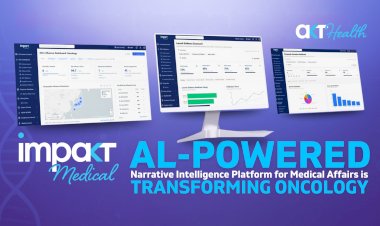
- Clinicians review and act using AI-powered dashboards (Datakapt, Pulse).
- Systems learn from outcomes and update predictive models automatically.

 Through our Outcomes and Commercial verticals, AKT Health turns these insights into strategic value for biopharma and payer networks.
Ethical AI, Data Privacy & Global Compliance
AI’s promise is immense, but trust and transparency are non-negotiable.
AKT Health embeds AI ethics and data governance across all operations:
- Regulatory Alignment: HIPAA (U.S.), GDPR (EU), PMDA (Japan), CDSCO (India), DHA (UAE).
- Blockchain-based Audit Trails (HealthNode): Every data interaction is traceable and tamper-proof.
- De-identification & anonymization of patient data
- Transparent AI models with clinician interpretability
Fact: 62% of healthcare executives believe that “explainability” will determine whether AI is trusted for clinical use (Deloitte, 2025).
By embedding privacy within innovation, we build systems that are both intelligent and ethical.
Global Impact: Hospitals Without Walls
With AI-powered RPM and DCT (decentralized clinical trials) frameworks, healthcare delivery is moving from hospital-centric to home-centric.
Real-world case studies demonstrate:
AI is expanding the definition of care beyond hospitals, creating a hospital-at-home model.
Examples:
- Cleveland Clinic (U.S.) – Home-based heart failure program using predictive AI reduced ER visits by 23%.
- Tokyo Metropolitan Hospital (Japan) – RPM for COPD patients decreased hospitalization days by 29%.
- NHS England – AI patient triage saved 2.5M outpatient appointments annually.
With AKT Health’s DCTs (Decentralized Clinical Trials) and RPM ecosystems, data doesn’t just monitor, it empowers continuous, proactive engagement.
This evolution redefines care delivery: predictive, preventive, personalized, and participatory.
The Next Frontier of Proactive Healthcare
The next phase of AI in healthcare is not just predictive, it’s prescriptive, which not only predicts but also recommends actions.
Emerging Trends
- AI-Guided Digital Twins: Simulate patient responses before treatment.
- Voice-based diagnostics: Detect neurological or respiratory changes through speech.
- AI-enabled interoperability: Unifying clinical, claims, and behavioral data for 360° patient view.
- AI Integration: Bridging predictive analytics, decentralized data, and operational intelligence across the global ecosystem.
 By 2030, proactive AI systems are projected to prevent 12 million avoidable deaths annually (WHO, 2025 estimate). Systems will not only forecast events but recommend specific actions, like therapy adjustments or lifestyle interventions, based on real-world evidence.
Data-Driven Empathy
AI does not replace human care; it enhances it. When data is interpreted with context and compassion, technology becomes a partner in healing. This enables healthcare systems to care before the crisis.
By transforming patient data into proactive care strategies, AI empowers clinicians to act earlier, patients to engage more deeply, and systems to operate more intelligently. With the integration of Hakase AI Platform and Impakt Health Ecosystem, AKT Health is building the infrastructure for a learning healthcare system, where every data point drives smarter decisions and better outcomes.
At AKT Health, we see this as the core of the future health continuum from reactive treatment to predictive, personalized care
FAQ Section
Q1. How does AI improve patient outcomes?
By analyzing real-time data, AI can predict clinical risks early, guide interventions, and personalize treatments, reducing hospitalizations and improving recovery rates.
Q2. Is AI reliable for medical decision-making?
When trained on high-quality, diverse datasets and validated by clinical experts, AI achieves diagnostic accuracy comparable to or better than human clinicians for specific tasks.
Q3. How does AKT Health use AI responsibly?
We combine data security, AI governance frameworks, and clinician oversight to ensure safe, transparent, and ethical deployment of AI solutions.
Q4. What’s the future of AI in healthcare?
AI will evolve into prescriptive and autonomous care systems that continuously learn from outcomes, linking clinical trials, real-world evidence, and patient journeys seamlessly.